
A childhood is not raised in an apartment. It is raised in the geometry of the address. The corridor that connects the door to the lift. The lift that connects the floor to the podium. The podium that connects the home to the friend who lives, just then, on the seventh floor of Tower 9. A childhood at Forbes Fab Luxe Residences is the quiet accumulation of these geometries — the daily, repeatable, almost-boring journey from one part of a thirteen-acre estate to another, undertaken on foot, in air that is breathable, with a peer group that is, by virtue of the address itself, dense.
This is a slow essay on what it means to bring up a family in an Indian luxury residence in the second half of the 2020s. Not a brochure of features. A walk through a year — through schools and AQI numbers, through art academies and paediatric on-call rosters, through the small luxuries that, taken individually, look like marketing and, taken together, look like a childhood you would not have been able to engineer otherwise.
SchoolsThe address is the shortlist
Sector 4 in Greater Noida West does something quiet to the school decision. It moves, into the ten-to-fifteen-minute radius, a list of CBSE, ICSE and IB schools that — in most other parts of the NCR — would require either a longer commute or a different postcode. Lotus Valley International. Delhi Public School Greater Noida. Pacific World. Ryan International. Genesis Global. GD Goenka. Father Agnel. The early-years through senior-secondary spectrum is, from a Fab Luxe portico, a fifteen-minute drive in any direction.
This is the structural reason for the choice many young families are making. Not the marble. Not the swimming pool. The school commute. A ten-minute school bus is a different thing from a forty-minute one. A morning that ends at eight is a different thing from a morning that ends at nine. The compound interest of saved school commute, multiplied across two children for fifteen years, is somewhere between two thousand five hundred and four thousand hours of childhood that has been redirected from a car seat to a study, a friend's flat, an art class.
The east gate at Fab Luxe is designed for school traffic. The portico is wide. The buses arrive in a rotation the security supervisor knows by heart. The Golf Carta — the managed shuttle that runs across the campus — picks up children whose parents have miscalculated the walk and gets them to the gate before the bus has decided to leave without them. The forensic cost of this is small. The behavioural benefit, over a school year, is the difference between a calm Monday morning and a panicked one.
AirThe AQI that was the brief
A child raised in Delhi-NCR will, by the age of ten, have lost between two and four percent of lung function relative to a peer raised in a coastal city. This is not a marketing claim. It is a published observation. The Fab Luxe brief took it seriously. Every apartment carries a one-hundred-percent fresh-air supply system. The podium has supplementary AQI infrastructure. The kids pool, the play areas, the central green and the amphitheatre are all engineered to maintain their immediate microclimate within paediatric-safe ranges through the worst weeks of the year.
What this looks like in practice: the wall panel in the four-bedroom on the sixteenth floor of Tower 4, on a Wednesday in November, reads forty-two. The boundary wall reads two hundred and ten. The mother of the seven-year-old in that apartment has stopped checking the boundary number. She used to check it three times a day. By the second winter, she had stopped. The clean air had become the assumption. That is the highest compliment an engineering decision can be paid.
For families with asthmatic or respiratory-vulnerable children — a category that, in NCR, is no longer the minority — the difference is not aesthetic. It is medical. The number of nebuliser sessions per winter, in the families that have moved in early, has dropped by between forty and seventy percent. The number of mid-winter respiratory hospital admissions, in the same cohort, has dropped towards zero. None of this is on a brochure. All of it is what, by year five, will be the quietest reason that families stay.
The AcademiesThe afternoon that does not require a car
The defining feature of Indian middle-class childhood, between five and twelve, has become the afternoon car commute. The drop to school. The pickup from school. The drop to football. The pickup from football. The drop to art. The pickup from tutorial. By twelve, a child has spent more time strapped into a Honda City than they have at any single school. The Fab Luxe brief decided that this was, in 2026, an unacceptable design output.
The campus has, on its 35,000 square foot clubhouse and across the broader 75,000 square feet of amenities, an on-campus art academy and an on-campus sports academy. The art academy has a ceramics studio with a kiln, a printmaking press, three painting rooms, a sculpture corner, and a digital arts pod. The sports academy has two tennis courts, a basketball court, a volleyball court, a badminton hall, table tennis, billiards, a skating rink, an outdoor gym, and the eight-hundred-metre jogging loop. The coaches and the teachers — for the first three years — are paid for by the assurance programme.
What this means is that a Wednesday afternoon for an eight-year-old at Fab Luxe runs from school bus arrival at three forty to art academy from four to five fifteen, sports academy from five thirty to seven, and home for dinner at seven thirty. None of that involves a car. None of it involves a parent driving. None of it involves a sibling waiting in the back seat with a tablet. The childhood that previously required two parents and a car has been folded into the building itself.
The peer group, by virtue of the academies, is structured. The under-twelve cricket clinic has seventeen children. The Tuesday ceramics class has eight. The Saturday painting open-studio has, on a good morning, twenty-five. By the second year, an eight-year-old has met the same friends through three different lenses — the lift, the bus stop, the kiln. That triangulation is what, in adult life, will be remembered as having been brought up somewhere, rather than as having been driven through one.
PlayThe play that is gated and not policed
The maze runner, the mound and sculpture court, the kids pool, the butterfly garden, the herb garden, the urban farming plot, the bird's park, the pets garden — these are not decorations. They are the texture of an unsupervised hour. A six-year-old at Fab Luxe can walk, on her own, from her tower to the maze runner. She will pass three security cameras and one patrolling guard. She will not cross a road. She will, on the way, almost certainly meet at least one neighbour she knows. The city, which is normally the place a parent has to negotiate with on behalf of a child, has been, here, replaced by a gated landscape that has been designed for the child's autonomy.
This is what gating, at its best, produces. The freedom to be small without being supervised. The first time a child walks alone from her flat to the kids pool is, in any urban Indian middle-class life, an event. At Fab Luxe, it is an event that is engineered to be possible at six rather than at eleven. That five-year difference in independence is, by year fifteen, the difference between a young adult who knows how to navigate her own day and one who is still asking permission for it.
The childhood-in-towers question — does a 35-floor tower feel claustrophobic to a child? — is answered by the podium. The podium, at Fab Luxe, is bigger than the playground of most schools. Nine acres of greens. Fifteen distinct landscaped zones. The vertical apartment is the bedroom. The campus is the playroom. The ratio between built-up and green, at thirty to seventy, is the structural reason a Fab Luxe child is raised more outdoors than indoors.
EldercareThe grandmother who has stayed
Multigenerational families, in urban India, fail at one specific point — the grandparent decides, around year three, that the apartment is too small or too distant from her own routines. The Fab Luxe Senior Citizen Zone, the wide podium, the low-impact fitness, the priority Golf Carta access, and the medical concierge are designed against that exit. They give the grandmother a campus of her own. The Tuesday yoga session for over-fifty-fives. The Thursday board-games corner with the chess set. The Sunday morning poetry reading at the amphitheatre. The grandmother becomes, again, a person rather than a patient.
The benefit to the grandchild is structural. A grandmother who has stayed is a grandmother who reads, who corrects homework, who teaches a board game from her own childhood, who tells the story of partition, who makes the dal that the mother has not learned to make. The Fab Luxe campus is one of the few residential propositions in NCR that has been designed for the grandmother's stay. That is the under-marketed feature for buyers in their late thirties with parents in their late sixties.
The Peer GroupThe address itself is the friendship
The eleven towers at Fab Luxe, at G+35 with four homes per floor, will produce roughly one thousand five hundred and forty households at full population. The demographic — by virtue of the price band, the school catchment and the configuration mix — skews to dual-earning professional families and multi-generational households with school-age children. The result, by year three, is a peer group that is dense and continuous across ages zero to seventeen.
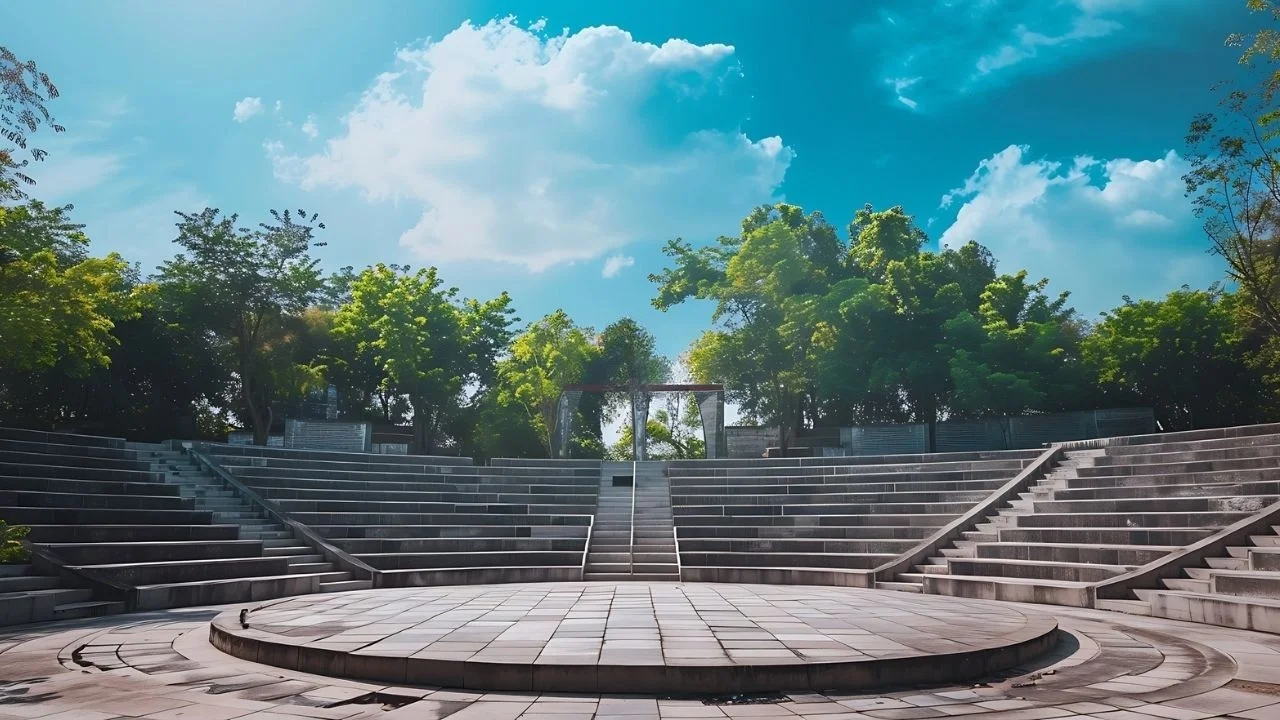
This matters in a specific way. The cohort that an eight-year-old will be in friendship with at Fab Luxe is the cohort she will, with high probability, still be in friendship with at thirteen. The address has done some of the work. The art academy has done some of the work. The sports academy has done some of the work. The bus stop has done some of the work. By the time the parent is choosing a thirteen-year-old's birthday party, the question is no longer "who will come?" — it is "where do we have room for thirty-two of them?" The answer is the banquet lawn, the amphitheatre, or the clubhouse multi-purpose room. All three are available. All three are walking distance.
The PricingWhat this actually costs
A 3 BHK + Study at Fab Luxe begins at 2,690 sq ft and is priced from ₹2.96 Cr. The 4 BHK + Study at 3,307 sq ft is on application. The basic sale price is approximately ₹12,000 per square foot; the all-inclusive is closer to ₹14,000. For a young family considering schools, academies, peer group and air, the comparison is not between Fab Luxe and a smaller apartment in a less-managed residence. It is between Fab Luxe and a comparable Gurugram or south-Delhi address, which would price thirty to fifty percent higher for the same configuration without delivering the on-campus academies or the AQI brief.
The arithmetic, for a young family, is favourable. A 2,690 sq ft 3 BHK at ₹2.96 Cr translates to approximately ₹11,000 per square foot — for a luxury residence with a fresh-air supply, two academies, a 35,000 sq ft clubhouse, a three-year assurance programme, and a school-bus radius that contains every meaningful curriculum. There are few addresses in NCR, in 2026, that match that brief. There are none that match it at this price.
Raising a family at Forbes Fab Luxe Residences is, in the end, a slow accumulation of mercies. The school bus that arrives on time. The chai that is delivered. The art class that is on the same campus. The grandmother who has not left. The peer group that has stayed dense. The air that is, on a Wednesday in November, breathable. None of this is what the brochure photograph leads with. All of it is what, in fifteen years, the resident will describe as the reason her children were raised well.
Bring the family to walk the campus.
Family-oriented site visits include a tour of the art academy, the sports academy, the kids pool, the maze runner, and the school-bus portico — by appointment.
Schedule a Family Tour →Frequently Asked
Which schools are nearby Forbes Fab Luxe Residences?
Sector 4 sits within ten to fifteen minutes of Lotus Valley International, DPS Greater Noida, Pacific World, Ryan International, Genesis Global, GD Goenka, and Father Agnel — covering CBSE, ICSE and IB curricula across the early-years through senior-secondary range.
Is the campus safe for children to move around independently?
The 13-acre campus is gated, vehicle-segregated at podium level, and patrolled by trained security 24 hours. Internal play zones, the jogging loop, the academies and the kids pool are all reachable on foot from any tower without crossing a road. Children from age seven typically begin moving independently within the estate.
What is the on-campus art academy programme for children?
The Fab Luxe art academy runs structured age-band programmes — early-years sensory art, ages 7 to 11 in painting and sculpture fundamentals, ages 12 to 16 in drawing, ceramics, printmaking and digital art. There is a kiln, a printmaking press, and a resident-artist visiting schedule.
How does the AQI management protect children's health?
Every apartment carries a 100% fresh-air supply system, with supplementary AQI infrastructure at podium level. On winter days when external Greater Noida West AQI can spike past 300, indoor and shaded-podium readings stay within the 35 to 70 band — a level paediatric guidance considers safe for outdoor play.
Are there paediatric and emergency facilities nearby?
Yatharth Hospital is roughly seven minutes from Sector 4. Sharda, Yashoda and Apex multi-specialty hospitals are within ten to twenty minutes. The concierge under the 3-Year Assurance Programme maintains a paediatric on-call roster, and a 24-hour ambulance is on standby through the campus medical room.
What is the peer group like for children at Fab Luxe?
11 towers G+35 with four homes per floor produce roughly 1,540 apartments at full population. The resident demographic skews towards young dual-earning professionals and multi-generational families, producing a deep peer group across ages 0 to 17. The art and sports academies organise children into structured age bands.