
Wellness, in most Indian luxury residences, is a brochure word. It appears next to the photograph of the gym and disappears into the floor plan. At Forbes Fab Luxe Residences, the wellness suite has been treated as architecture — a sequence of rooms, surfaces, daylight choices and acoustic decisions that, taken together, form an instrument the body uses every day. Not an amenity. An infrastructure. The difference between the two is the difference between a spa weekend and a spa life.
This essay walks the wellness suite at Fab Luxe room by room — the steam, the sauna, the reflexology path, the yoga and meditation centre, the treatment room, the quiet recovery lounge — and argues for a particular thesis: that the most luxurious thing a residence can do for its residents is to make wellness frictionless. A four-minute walk replaces a fortnight's plan. A repeating Tuesday yoga class replaces an annual retreat. A private sauna replaces the holiday in Reykjavik. That is the architectural argument for the spa-in-residence.
The BriefWhy the spa was argued for, not added
The wellness suite at Fab Luxe was, in the original brief, a programmatic decision — not an aesthetic one. The argument went like this. A spa visit, in NCR, costs between four and twelve thousand rupees per session. A weekly visit, multiplied across a year, is the price of a small holiday. Most NCR residents do not, in practice, sustain a weekly spa visit beyond the first quarter — the friction of booking, traffic, parking, and the thirty-minute pre-treatment ritual erodes the habit by month four.
The Fab Luxe brief looked at this and asked the obvious counterfactual: what if the spa was three minutes from the apartment, with no booking friction, no parking, no traffic, and a regular therapist who knew the body across years? The answer was that the residents who would otherwise have visited a spa twelve times a year would, in this configuration, visit it eighty or one hundred times. The compound benefit — physiological, psychological, social — would be different by an order of magnitude.
Hence the wellness suite. Not as a marketing flourish. As a compounding instrument. The brief language was specific: the suite must be designed such that its weekly use feels not like an event but like a daily rhythm. The architecture must remove every microscopic point of friction that would, in a hotel spa, push the visit into the calendar rather than into the day.
The ApproachThe thirty-five-second walk
The journey from a Fab Luxe apartment to the wellness suite is, on average, thirty-five seconds in a lift and three minutes on foot. The clubhouse — thirty-five thousand square feet across three levels — has the wellness floor on the second podium. The lift opens into a low-lit corridor that has been finished in matte stone and warm timber. The corridor has, intentionally, no signage. It does not need to. The body knows, after the second visit, where it is going.
This is the architectural decision that matters. The corridor is the beginning of the treatment, not the entrance to the treatment. The residential spa industry, when copied from hotel design, makes a mistake here — it builds a reception, a check-in, a clipboard, a slipper exchange, a locker line. All of that is removed at Fab Luxe. The resident walks in, hangs the robe in their assigned cabinet, and steps into the suite. The first sixty seconds, in a hotel spa, are bureaucratic. At Fab Luxe, they are silent.
Daylight enters through skylights. Not floor-to-ceiling glass — that would compromise privacy — but high clerestories that wash the corridor with diffused north light through most of the day. A vertical green wall, three metres tall, runs along the west side. A low water feature, six inches deep, runs the length of the entry. The body, before any treatment has begun, is being signalled by the room itself that it has arrived somewhere different.
The Steam RoomEighteen minutes of damp silence
The steam room at Fab Luxe is built to a specific brief — twenty-two cubic metres, finished in dark green Italian stone, lit at a low warm temperature, with eucalyptus oil on a quarter-hour timed dispense. It seats twelve. On most weekday evenings, between four and seven residents are in it at any given time. The conversation, by week three, has stopped being a conversation. Steam rooms produce a particular kind of silence — the silence of bodies recovering, where conversation is inappropriate but presence is not. You do not need to speak. You do not need to ignore. You sit, you breathe, you let the muscles surrender.
The eighteen-minute steam, three times a week, has documented physiological benefits — improved circulation, sweat-led toxin clearance, reduced cortisol, lowered cardiovascular load. The Fab Luxe sauna, by contrast, is a Finnish dry sauna at eighty-two degrees — different physiology, different benefit, and architecturally separated by a cold-water plunge that resets the nervous system between transitions.
The architectural decision to keep steam and sauna in adjacent but distinct rooms — rather than the common North Indian compromise of a single hybrid cabin — was a small but meaningful one. A hybrid cabin halves the temperature differentiation; therefore halves the physiological signal; therefore halves the benefit. The Fab Luxe brief refused that compromise. Two rooms. Two therapies. One transition. The cold plunge in between is the fulcrum.
The Reflexology PathEight minutes of stones and decision
The reflexology path is the most surprising piece of the suite. It is twenty-four metres long, set into a corridor that runs along the eastern face of the wellness floor, finished in graded river stones from rough at one end to smooth at the other. The resident walks it barefoot, slowly. Eight minutes is the recommended duration. The discomfort, initially, is significant. By the third visit, the discomfort has become information — the foot has developed the language with which the body communicates its small structural complaints.
This is biophilic design at its most direct. The path uses the textures of nature to do what a Western podiatrist would do with a more interventionist tool. The benefit is documented in the rehabilitation literature — improved proprioception, lowered plantar fascia stress, better balance into the seventh and eighth decades. The Fab Luxe reflexology path is, for residents over fifty, the single most-used amenity on the wellness floor. It is also, intriguingly, the cheapest to build and maintain.
Yoga and MeditationThe room that is mostly empty
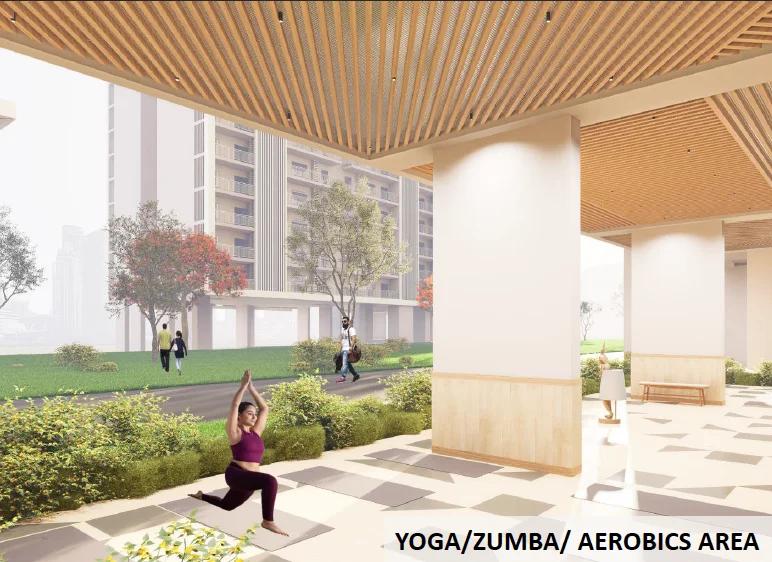
The yoga and meditation centre is, architecturally, the most disciplined room in the suite. It is mostly empty. Seventy-two square metres, with a polished timber floor, north-facing diffused daylight, no mirrors, no equipment racks, no music system in the room itself. A single wall is treated in lime plaster. The opposite wall has a low ledge for personal mats. Twelve cushions are stacked in the corner, in a small ash-wood cabinet. That is the furniture. That is the entire furniture.
The instruction — through the assurance programme — is to under-furnish. A meditation room with too many objects becomes a yoga studio. A yoga studio with too many objects becomes a fitness class. The Fab Luxe centre has refused both compromises. It is a room for sitting, for breathing, for being still — and for the occasional teacher who comes in, leads, and leaves the room exactly as they found it.
The schedule, paid for in the first three years by the assurance programme, is gentle. Six AM yoga, four days a week. Seven PM yoga, three days a week. Sunday morning meditation, ninety minutes. Wednesday evening pranayama. The instructors are paid full-time professionals — not interns, not freelancers — and the resident knows them by name within the first quarter. The relationship that develops, over two and three years, is the most under-marketed feature of the entire amenity package. It is also the one most likely to predict whether a resident will, in year ten, still describe Fab Luxe as her home rather than her apartment.
The Treatment RoomThe therapist who has stayed
Beside the wellness corridor sits a single treatment room, finished in warm clay and linen. It has, by design, only one massage table. The Fab Luxe brief specifically refused the two-table or four-table model that hotel spas favour for revenue reasons. A residential treatment room, the brief argued, is not a revenue centre — it is a relationship space. One table allows for one therapist working with one resident in privacy that hotel spas, by their multi-room operations model, cannot match.
The therapist is, through the assurance programme, retained on a long-term roster. The resident books through the concierge. The first session is a slow assessment. The second session is corrective. By the sixth session, the therapist has a working map of the resident's posture, sleep, stress, and joint history that any GP would be glad to have. The benefit, by year two, is medical rather than recreational. The therapist becomes a co-author of the resident's wellness ritual.
Biophilic DesignThe room that is part of the treatment
The phrase biophilic design has become loose in Indian architectural marketing. At Fab Luxe, it means something specific. The wellness suite has been designed such that the architectural cues — daylight, planting, water, natural materials, organic geometry — do measurable physiological work on the body before any therapy has begun. The clerestory daylight signals circadian alignment. The vertical green wall lowers ambient noise by between two and four decibels and improves perceived air quality. The low water feature contributes a frequency range — the white-noise pulse of moving water — that is documented to lower heart rate variability stress markers within four minutes of exposure.
The materials are pointed. Stone for thermal mass. Timber for warmth. Lime plaster for breathability. No plastic in the resident-facing surfaces. No synthetic upholstery in the recovery lounge. The acoustics are tuned — there are felt panels above the meditation room and absorbent linen drapes between zones. The ambient temperature is a degree warmer than the rest of the clubhouse to discourage shoulder-tension. Each of these is a small, almost-invisible decision. Together, they constitute the room.
This is what the brief called wellness as architecture. The room itself is the first treatment. The therapist, the steam, the yoga teacher are second-order. By the time you have walked through the corridor and removed your shoes for the reflexology path, the body has already entered a parasympathetic state. The architecture, before the human, has done the first work.
The CompoundingWhat two years of weekly use produces
A resident who uses the Fab Luxe wellness suite three times a week for two years will have logged, at minimum, three hundred sessions. That is more than most members of a five-star hotel spa programme will achieve in a decade. The physiological compounding is significant — improved sleep depth, lowered resting heart rate, increased musculoskeletal range of motion, lowered cortisol, reduced winter respiratory load when paired with the campus-wide AQI management.
The psychological compounding is harder to measure but easier to feel. A resident who has, for two years, walked thirty-five seconds to a wellness suite that knows her by name will describe, when asked, a quality of life that is almost embarrassing to articulate. The architecture has folded into her week so completely that she has stopped identifying it as a feature of her residence. It has become a feature of her body. That is the architectural achievement Fab Luxe has been working for.
For the buyer in 2026 evaluating luxury apartments in Greater Noida West with a wellness brief, the question is no longer whether the spa is on the floor plan. It is whether the spa is in the architecture, in the schedule, in the relationships. At Fab Luxe, by the second podium, in a corridor of stone and timber and unsigned doors, that question has, slowly and deliberately, been answered.
Walk the wellness suite in person.
Wellness-floor walkthroughs include the steam, the sauna, the reflexology path, the meditation centre and the treatment room — by appointment, with a slow tea afterwards.
Schedule a Wellness Tour →Frequently Asked
What facilities does the Fab Luxe spa include?
The wellness suite includes a steam room, a sauna, a reflexology path, a yoga and meditation centre, a treatment room for massage and bodywork, a quiet recovery lounge, and direct adjacency to the resort-style swimming pool. The whole suite is designed under a biophilic brief.
Is the spa open daily and is booking required?
The spa is open seven days a week. Steam, sauna and pool are walk-in for residents under reasonable load. Treatment-room sessions, yoga and meditation classes are bookable through the resident app, with the assurance programme covering the first three years of instructor schedules.
What does biophilic design mean in this context?
Biophilic design uses architectural cues from nature — daylight, planted walls, water features, natural materials, organic geometry — to lower stress markers and improve recovery. The Fab Luxe wellness suite uses skylit corridors, a vertical green wall, a low water feature, and stone-and-timber finishes throughout.
Are spa services charged separately or included in maintenance?
Access to the spa core — steam, sauna, reflexology, yoga and meditation centre — is included for residents under the maintenance and assurance framework. Therapist-led treatments such as massage and specialised bodywork are charged per session at curated partner rates.
Is the spa suitable for older residents and those with health conditions?
Yes. The Senior Citizen Zone has direct connection to the wellness suite, with low-impact yoga and gentle bodywork available. The treatment room is wheelchair-accessible. Residents with cardiovascular, respiratory or musculoskeletal conditions are advised to consult through the medical concierge before sauna or steam use.
How does the spa compare with a five-star hotel spa?
A residential wellness suite outperforms a hotel spa in three ways — proximity (a four-minute walk versus a thirty-minute drive), continuity (a regular schedule rather than occasional visits), and personalisation (the same therapist over years). What it lacks in one-night luxury it more than recovers in compounding daily benefit.